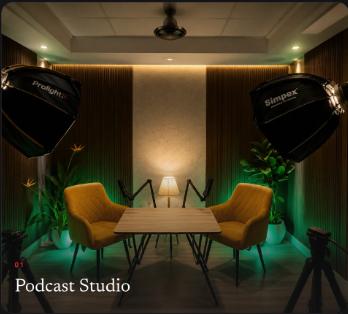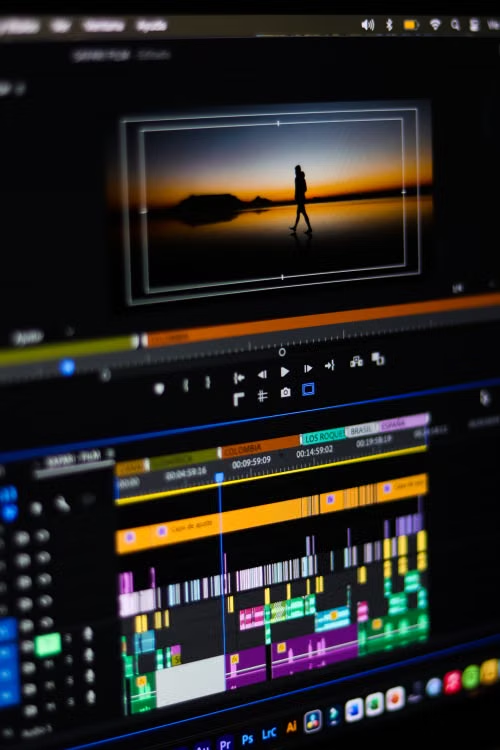
In the age of YouTube video podcasts and Spotify Video, visual production value is just as crucial as crystal-clear audio. Flat, overhead office lighting immediately makes a show look amateurish, whereas professional 3-point studio lighting commands authority and viewer retention.
Whether you are setting up a home studio or optimizing a dedicated space, here is how to master cinematic lighting for video podcasts.
1. The Key Light: Soft, Directional Illumination
Your Key Light is the primary illumination source for your subject’s face. Position your key light 45 degrees to the side of the camera and 45 degrees above eye level. Crucially, use a large softbox (such as a 90cm parabolic softbox with grid) to soften harsh shadows and create pleasing catchlights in your host’s eyes.
2. The Fill Light or Diffuser
The Fill Light sits on the opposite side of the camera to soften the shadows created by the key light. Rather than using a second bright lamp, we recommend using a passive white foam board or a heavily dimmed LED mat (set to 20-30% power) to maintain subtle shadow contrast on the face without washing out facial depth.
"Contrast creates depth in 4K video. Don’t eliminate shadow on the fill side entirely — a subtle 3:1 lighting ratio makes your hosts pop off the background."
3. The Hair/Rim Light & Background Accents
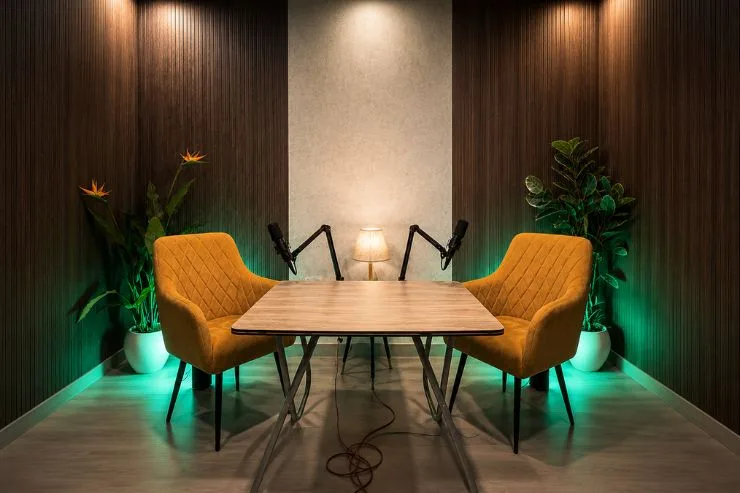
To separate your speaker from dark acoustic walls, place a Rim Light behind the subject angled down toward their neck and shoulders. Finish the set design with warm tungsten practical lamps or RGB tube lights on the background set pieces to create modern visual hierarchy.
Studio Recommended Checklist
- Aputure Amaran 200d with Octa Softbox for Key Light
- Nanlite Pavotube II RGB Tubes for Background Accent
- C-Stands with Boom Arms to keep light stands out of camera frame